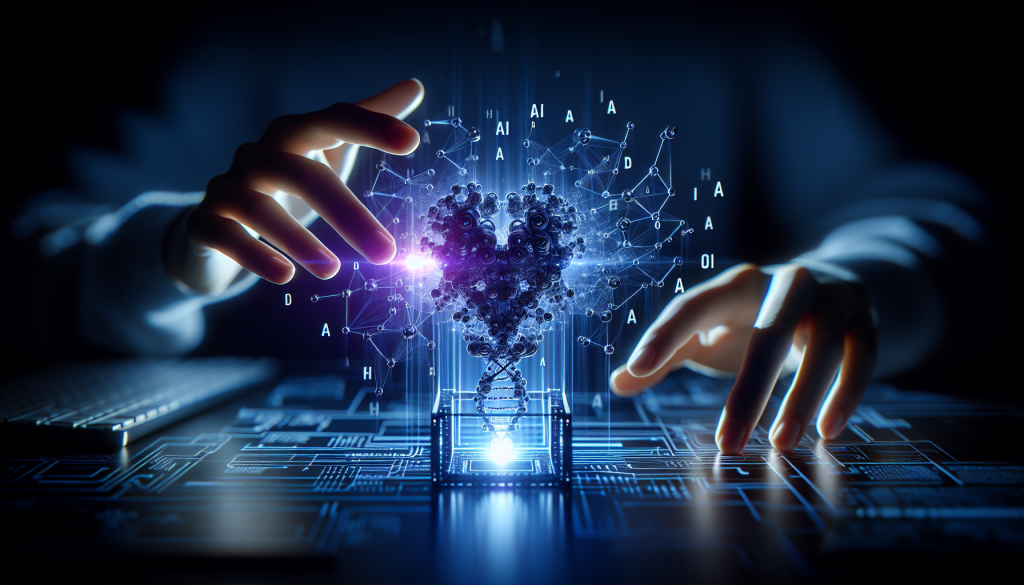
Google DeepMind has announced a revolutionary advancement in artificial intelligence with the latest version of AlphaFold3, which can now not only predict protein structures but also design entirely new proteins from scratch. This December 2024 breakthrough represents a monumental leap forward in computational biology and drug discovery. The AI system can generate novel protein sequences that fold into specific desired shapes, potentially accelerating the development of new medicines, enzymes for environmental cleanup, and materials with unprecedented properties. This development could eventually transform healthcare by enabling scientists to design custom proteins to fight diseases like cancer and Alzheimer’s, create more effective vaccines in record time, and even develop solutions to global challenges like plastic pollution through engineered enzymes. The implications extend beyond medicine into agriculture, manufacturing, and environmental protection, marking a pivotal moment where AI transitions from understanding nature to actively helping humanity redesign it for better outcomes.
The new AlphaFold3 protein design capability builds upon the original AlphaFold2 system that won DeepMind the Breakthrough Prize in Life Sciences. While the previous version could predict how existing proteins fold based on their amino acid sequences, this latest iteration works in reverse. Scientists can now specify the shape and function they need, and the AI generates the amino acid sequence required to create that protein. This inverse design process traditionally took years of laboratory experimentation, but AlphaFold3 accomplishes it in hours or days. The system has already been validated by synthesizing several designed proteins in the lab, with experimental results confirming that the AI-generated sequences fold exactly as predicted.
How the Protein Design System Works
The breakthrough relies on advanced deep learning techniques including diffusion models, which are similar to those used in image generation AI but adapted for three-dimensional molecular structures. The system learned from millions of known protein structures in databases, understanding the fundamental rules governing how amino acids interact and fold. When researchers input desired properties such as binding to specific molecules or catalyzing particular chemical reactions, AlphaFold3 explores vast possibilities to find sequences that meet those requirements. The AI evaluates countless combinations that would be impossible for humans to test manually, considering factors like thermodynamic stability, solubility, and biological compatibility. This computational power enables the design of proteins that may not exist anywhere in nature but could serve crucial human needs.
Practical Applications Already in Development
Pharmaceutical companies and research institutions have already begun collaborating with DeepMind to harness this technology. Several projects are underway to design proteins that can neutralize specific viruses, break down harmful chemicals, or deliver drugs precisely to diseased cells while avoiding healthy tissue. Environmental applications include engineering proteins that can decompose plastics more efficiently than existing enzymes, potentially addressing the global plastic waste crisis. In agriculture, researchers are exploring designed proteins that could help crops resist drought or disease without genetic modification. The technology could also revolutionize industrial processes by creating custom enzymes that work at extreme temperatures or in harsh chemical environments where natural proteins fail.
Challenges and Ethical Considerations
Despite the excitement, experts caution that significant challenges remain before designed proteins become commonplace therapeutics or industrial products. The jump from computational design to safe, effective real-world applications requires extensive testing and regulatory approval. There are also important ethical questions about creating novel biological molecules that have never existed in nature. Scientists and policymakers are working to establish guidelines ensuring this powerful technology is used responsibly. Concerns include potential misuse for harmful purposes, equitable access to resulting treatments, and environmental impacts of releasing engineered proteins. DeepMind has committed to making the tool available to academic researchers while implementing safeguards against dangerous applications. As this technology matures, society will need thoughtful frameworks balancing innovation with safety and ethics.