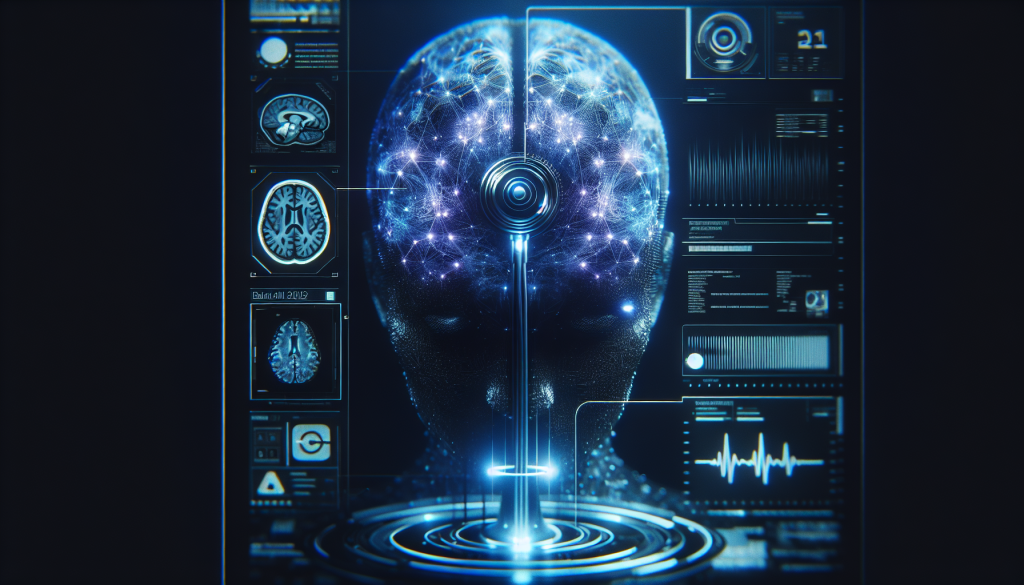
Researchers at the University of Michigan have created an artificial intelligence system that can interpret brain MRI scans within seconds and accurately identify a wide range of neurological conditions while flagging which cases require urgent medical care. This groundbreaking technology could transform emergency medicine by dramatically reducing the time between imaging and clinical decision-making, potentially saving countless lives and preventing lasting neurological damage. As AI continues to advance in medical diagnostics, this development points toward a future where rapid, accurate brain scan analysis becomes standard in hospitals worldwide, ensuring that stroke victims, trauma patients, and others with critical neurological conditions receive life-saving treatment in the crucial minutes that often determine whether someone makes a full recovery or suffers permanent disability.
How The AI Brain Scan System Works
The University of Michigan research team developed this sophisticated AI system by training it on hundreds of thousands of brain MRI scans from diverse patient populations. The machine learning model learned to recognize patterns and abnormalities associated with various neurological conditions, from strokes and brain bleeds to tumors and traumatic injuries. Unlike human radiologists who may need many minutes or even hours to carefully analyze complex brain scans, especially during busy overnight shifts or in understaffed facilities, this AI system processes the same images in mere seconds. The technology does not replace doctors but rather serves as a powerful tool that can immediately alert medical teams to urgent findings, allowing radiologists and neurologists to focus their expertise on treatment planning rather than spending precious time on initial scan interpretation.
Life-Saving Speed In Emergency Situations
In emergency medicine, every second counts when dealing with neurological conditions. When someone arrives at a hospital with stroke symptoms, brain trauma from an accident, or sudden neurological deterioration, doctors need to know immediately what is happening inside the brain to provide appropriate treatment. Traditional workflows require a radiologist to review MRI images, interpret the findings, and communicate results to the emergency team, a process that can take anywhere from 30 minutes to several hours depending on radiologist availability and case complexity. This new AI system changes that equation entirely by providing instant preliminary analysis the moment scanning completes. For stroke patients, this speed could mean the difference between receiving clot-busting medication within the critical treatment window or missing that window and facing permanent brain damage. For trauma patients with brain bleeds, faster diagnosis means faster surgical intervention and better outcomes.
Implications For Healthcare Access And Equity
Beyond speed, this AI breakthrough has profound implications for healthcare equity and access to specialist care. Many hospitals, particularly in rural areas and developing regions, do not have neurologists or specialized radiologists available around the clock. Patients in these facilities often face dangerous delays as scans must be transmitted to distant specialists for interpretation, or they must be transferred to larger medical centers, losing valuable treatment time in the process. An AI system capable of providing immediate, accurate brain scan analysis could effectively bring specialist-level diagnostic capability to every hospital with an MRI machine, regardless of location or time of day. This democratization of expertise could save lives in underserved communities and reduce the stark disparities in neurological care outcomes that currently exist between major medical centers and smaller community hospitals.
What This Means For Your Medical Care
For ordinary people, this technology represents a significant upgrade in the safety and quality of emergency medical care. If you or a loved one experiences a medical emergency involving potential brain injury or neurological symptoms, the presence of AI diagnostic assistance in the emergency room could dramatically improve your chances of rapid, accurate diagnosis and treatment. The system serves as a tireless second set of eyes that never gets fatigued during long shifts, never misses subtle details due to distraction, and can instantly compare your scan against patterns learned from hundreds of thousands of previous cases. However, this also raises important questions about medical AI reliability, liability when errors occur, and the changing role of human physicians in an increasingly automated diagnostic process. Patients will need to understand that AI serves as a tool to augment rather than replace human medical judgment.
Challenges And Concerns Ahead
Despite its promise, the deployment of AI for brain scan interpretation faces several significant challenges. The system must prove its reliability across diverse patient populations, including those with rare conditions or unusual anatomical variations that may not have been well-represented in training data. There are also concerns about algorithmic bias, as AI systems trained predominantly on data from certain demographic groups may perform less accurately for others. Medical professionals will need extensive training to understand the AI system capabilities and limitations, knowing when to trust its assessments and when to question them. Regulatory frameworks must evolve to address questions of liability when AI-assisted diagnoses lead to medical errors. Healthcare institutions will need to invest in the computational infrastructure required to run these systems and integrate them smoothly into existing clinical workflows without disrupting patient care.
The Future Of AI In Medical Imaging
This brain MRI breakthrough is just one example of a broader revolution occurring in medical imaging and diagnostics. Similar AI systems are being developed for analyzing chest X-rays, detecting cancers in mammograms and CT scans, and identifying heart problems in cardiac imaging. As these technologies mature and prove their reliability in clinical practice, we can expect them to become standard components of medical care over the next decade. The ultimate vision is a healthcare system where AI provides instant, accurate preliminary analysis of virtually any medical image, allowing human physicians to focus their time and expertise on patient interaction, treatment planning, and complex decision-making rather than routine image interpretation. For patients, this could mean faster diagnoses, fewer missed findings, more consistent care quality, and ultimately better health outcomes across all communities and healthcare settings.