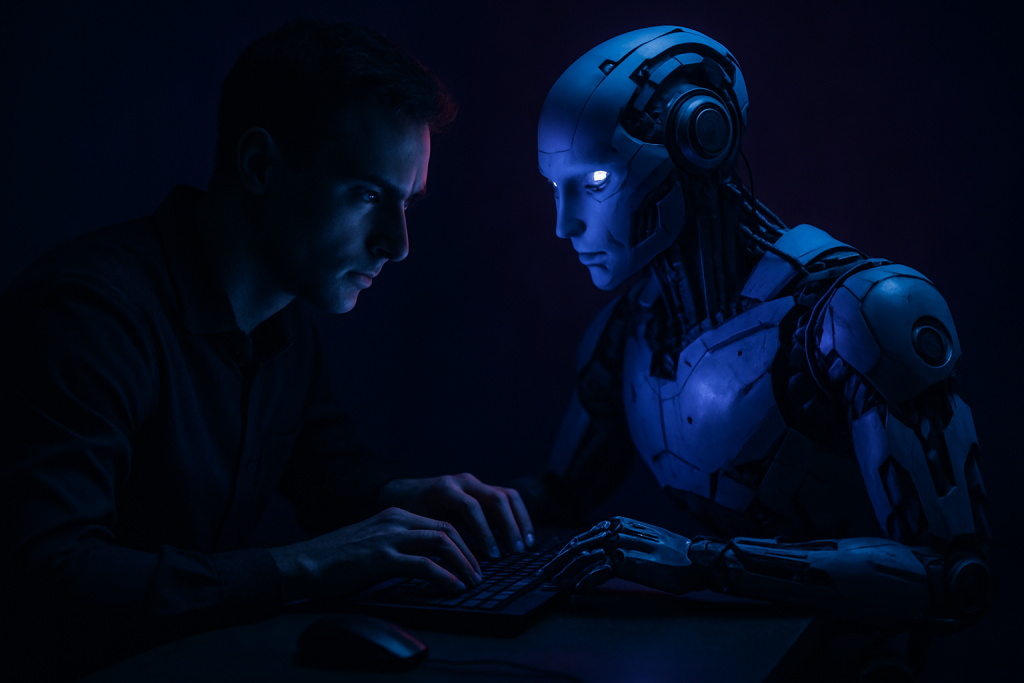
OpenAI has achieved a remarkable milestone with its GPT-5.4 model scoring 75 percent on the OSWorld-Verified test, marking a 27.7 percentage point increase over its predecessor and officially surpassing human-level performance on desktop task benchmarks. This breakthrough represents a fundamental shift in how artificial intelligence systems interact with computers, moving beyond simple conversation to executing complex workflows that previously required human intervention. For everyday users, this development could eventually transform how we work with computers entirely, potentially leading to AI assistants that can handle everything from organizing files and managing emails to conducting research and completing administrative tasks without constant supervision. The implications extend far beyond convenience, touching on job markets, productivity standards, and the very nature of human-computer interaction in the coming decades.
Understanding Test-Time Compute Technology
The Thinking variant of GPT-5.4 is particularly notable for its integration of test-time compute, allowing the model to ponder complex problems before outputting a response. Unlike previous AI models that generate responses immediately, this system takes time to consider multiple approaches and evaluate potential solutions before acting. Think of it like the difference between blurting out the first answer that comes to mind versus taking a moment to think through a problem carefully. This additional thinking time enables the AI to handle more sophisticated tasks with greater accuracy and reliability, making it far more trustworthy for important work.
Native Computer Control Capabilities
The capability for native computer use at the operating system level enables GPT-5.4 to act as a truly autonomous agent, navigating files, browsers, and terminal interfaces with minimal human intervention. This means the AI can open applications, search for files, click buttons, type information, and perform virtually any task a human could do using a mouse and keyboard. The system can understand visual interfaces, read text on screens, and interact with software just as people do every day. For individuals who struggle with technology or have accessibility needs, this could provide unprecedented independence and capability in the digital world.
The Shift Toward Agentic Systems
The center of gravity in the sector is moving toward agentic systems, which are AI programs that do not merely converse but execute complex, multi-step workflows across local and cloud environments. Rather than simply answering questions or generating text, these new AI agents can plan projects, break them into steps, and complete entire workflows from start to finish. Imagine telling your computer to research a topic, compile the findings into a presentation, and email it to your colleagues, all without touching the keyboard yourself. This transition from passive assistants to active agents represents one of the most significant developments in computing since the graphical user interface.
What This Means For Your Digital Life
The practical implications of human-level desktop performance are profound and far-reaching. Students could have AI assistants that help organize research materials, compile bibliographies, and format papers according to specific requirements. Small business owners might delegate routine administrative tasks like invoice processing, data entry, and appointment scheduling to AI agents. Remote workers could benefit from automated meeting summaries, document organization, and project management support. The technology could dramatically reduce the time people spend on repetitive computer tasks, freeing them to focus on creative thinking and interpersonal work that requires genuine human insight.
Security and Privacy Considerations
With AI systems gaining the ability to control computers at the operating system level, security becomes a critical concern that everyone should understand. An AI with full access to your desktop can potentially view sensitive information, access private files, and interact with banking or healthcare systems. Users will need to carefully consider what permissions they grant to AI agents and ensure proper safeguards are in place. Companies developing these systems must implement robust authentication measures, activity logging, and permission controls to prevent misuse. The question of who is responsible when an AI agent makes a mistake or causes harm remains legally and ethically complex, requiring new frameworks for accountability in an age of autonomous digital assistants.
The Road Ahead For Human-AI Collaboration
As AI systems become more capable of handling desktop tasks independently, society faces important questions about the future of work and digital literacy. Will people need to learn how to effectively supervise and direct AI agents rather than perform tasks themselves? How will education systems adapt to prepare students for a world where many routine computer skills are automated? The technology could reduce barriers for people entering the workforce by minimizing the need for advanced technical skills, but it might also eliminate entry-level positions that traditionally provided job training opportunities. Balancing these opportunities and challenges will require thoughtful policy decisions, ongoing dialogue between technologists and communities, and a commitment to ensuring that AI advancement benefits everyone rather than concentrating power and opportunity in the hands of a few. The achievement of human-level performance on desktop tasks is not an endpoint but rather the beginning of a new chapter in how humans and machines work together to solve problems and create value in the digital age.