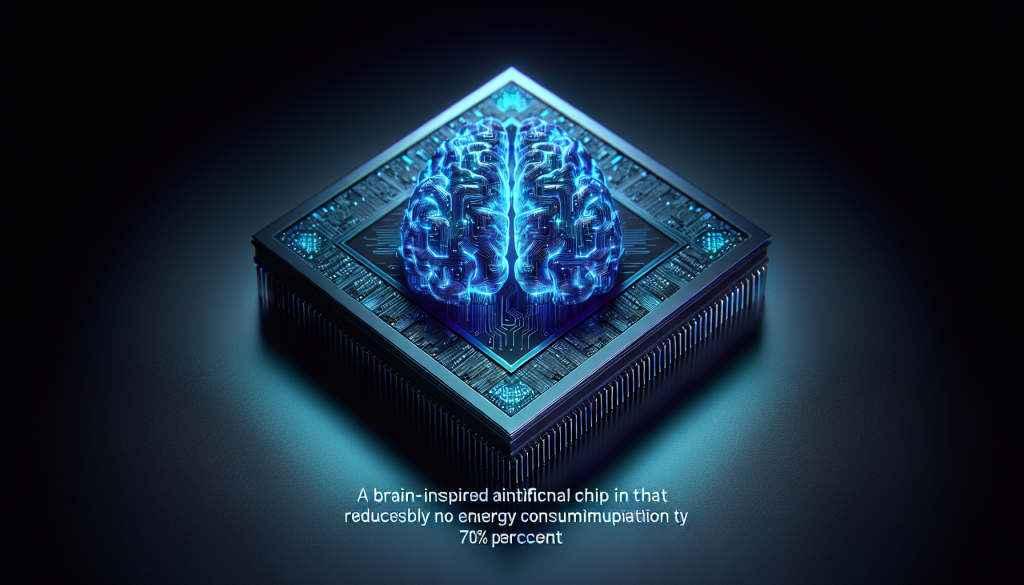
Scientists have achieved a major breakthrough in artificial intelligence hardware by creating a brain-inspired chip that could slash the energy consumption of AI systems by up to 70 percent. Researchers have engineered a new nanoelectronic device using a modified form of hafnium oxide that mimics how neurons process and store information at the same time. This innovation arrives at a critical moment when AI systems are consuming staggering amounts of electricity and the environmental impact of machine learning is becoming a global concern. If this technology reaches widespread adoption it could fundamentally transform how AI operates in data centers around the world while dramatically reducing carbon emissions and electricity costs for both companies and consumers who rely on AI-powered services daily.
How The New Chip Technology Works
Scientists have created a new type of nanoelectronic device that could significantly reduce how much energy artificial intelligence systems consume by copying how the human brain processes information. The human brain is remarkably efficient at processing complex information while using minimal energy compared to traditional computer chips. The research team led by the University of Cambridge developed a modified version of hafnium oxide that functions as a highly stable low-energy memristor. A memristor is a special component designed to replicate how biological neurons work by combining memory and processing in a single location. Unlike conventional chips that waste energy moving data back and forth this device operates with ultra-low power potentially slashing energy use by up to 70 percent. This means that instead of shuttling information between separate memory and processing units like traditional computers do the new chip performs both functions simultaneously just like neurons in the human brain.
Why AI Energy Consumption Matters
The energy demands of artificial intelligence have become a pressing global issue that affects everyone from individual users to entire nations. Modern AI systems require massive amounts of electricity to train large language models process image recognition tasks and power the chatbots and virtual assistants that millions of people use every day. Data centers housing AI computers already consume a substantial portion of electricity grids in many regions and this demand is accelerating rapidly as AI becomes more sophisticated and widely deployed. For regular people this translates to higher electricity costs and increased strain on power infrastructure. For the planet it means more carbon emissions unless the electricity comes from renewable sources. The environmental footprint of training a single large AI model can equal the lifetime emissions of several cars making energy efficiency in AI hardware not just a technical challenge but an environmental imperative.
The Path From Laboratory To Real World Applications
Progress finally accelerated late last year when the team modified the fabrication process and at the end of November they saw the first really good results. The journey to this breakthrough was not easy as the research team faced numerous setbacks over several years of experimentation. However the successful creation of this device represents a crucial step toward making AI technology more sustainable and accessible. When chips like this eventually make their way into commercial products they could enable AI applications to run on devices with limited power supplies such as smartphones wearable health monitors and remote sensors. This would open up possibilities for sophisticated AI capabilities in locations without reliable electricity and make advanced technology available to communities that currently lack access to power-hungry computing infrastructure.
What This Means For Your Daily Life
The implications of more energy-efficient AI extend far beyond environmental benefits and could reshape how artificial intelligence integrates into everyday life. For consumers this technology could mean smartphones that run powerful AI applications without draining batteries in hours or smart home devices that provide advanced automation without significantly increasing electricity bills. For businesses particularly small companies that cannot afford massive server farms this breakthrough could democratize access to AI capabilities by making them affordable to run. Medical facilities in developing regions could use AI diagnostic tools without requiring expensive power infrastructure. Students could access AI tutoring systems on low-cost devices and farmers in remote areas could deploy AI-powered crop monitoring without grid connectivity. The ripple effects would touch nearly every sector from education and healthcare to transportation and entertainment.
Security And Privacy Considerations
More efficient AI chips could also have significant implications for personal security and data privacy. When AI systems require less energy they can potentially run locally on personal devices rather than sending data to remote servers for processing. This means your private information such as health data personal photos or financial records could be analyzed by AI without ever leaving your device reducing the risk of data breaches or unauthorized access. Local processing enabled by efficient chips would give individuals greater control over their personal information while still benefiting from AI insights. However there are also concerns to consider as more powerful yet efficient AI could make it easier for malicious actors to deploy sophisticated surveillance systems or create convincing deepfakes on readily available hardware. The same efficiency that benefits legitimate users could also lower the barrier for harmful applications.
The Broader Context Of AI Hardware Innovation
This brain-inspired chip development is part of a larger movement in the technology industry to rethink how computers are built from the ground up. For decades computer chips have followed a basic architecture that separates memory from processing units but this design creates inefficiencies that become especially problematic for AI workloads. By drawing inspiration from biological systems engineers are discovering that nature has already solved many of the challenges facing modern computing. The human brain performs incredibly complex calculations using roughly the same amount of power as a dim light bulb demonstrating that there is enormous room for improvement in artificial systems. As research teams around the world pursue similar bio-inspired approaches we may be entering an era where computers look less like the machines we know today and more like the neural networks found in living organisms.
Looking Ahead To A More Sustainable AI Future
While this breakthrough is promising it is important to understand that commercialization will take time before these chips appear in consumer products or data centers. The technology is still in early stages and manufacturing these advanced nanoelectronic devices at scale presents significant engineering challenges. Researchers will need to ensure the chips can operate reliably under various temperature conditions work with existing software systems and meet the performance requirements of different applications. Nevertheless this development signals a clear direction for the future of AI hardware toward systems that are not only more powerful but also vastly more energy efficient. For society this could mean a future where artificial intelligence enhances human capabilities without placing unsustainable demands on energy resources or contributing excessively to climate change. As we stand at this technological crossroads the choices made by researchers engineers policymakers and consumers will determine whether AI becomes a force for sustainable progress or an environmental burden that outweighs its benefits.